
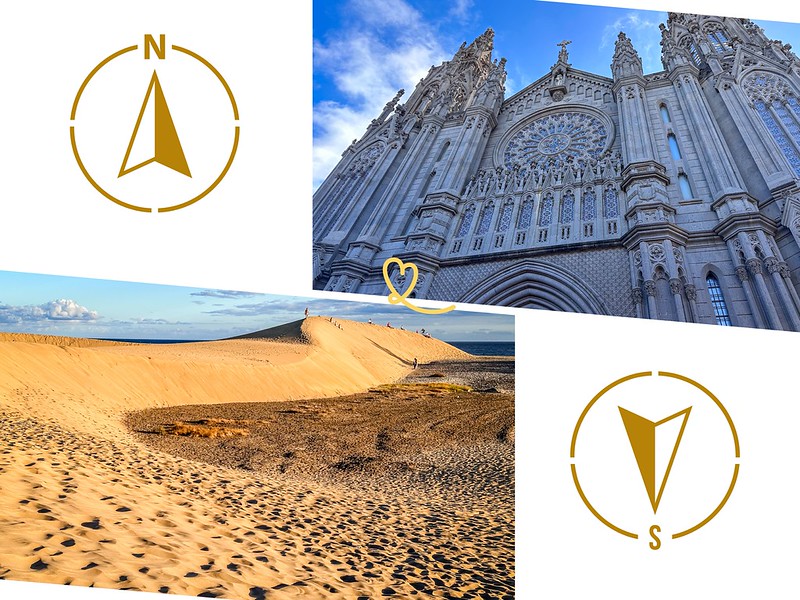
Golden beaches, spectacular dunes, green mountains and traditional villages… Gran Canaria offers remarkable diversity. But with such a contrasting island, where should you stay: Gran Canaria North or South?
Here’s our detailed comparison, with photos and practical advice, to help you make the best choice for your stay on this Canary Island!
This opinion is completely independent, based on our experiences. We visited the region anonymously, making our own choices and paying our bills in full.
Content
Gran Canaria North or South: summary
Understanding the island’s geography
Gran Canaria is a circular island about 50km in diameter. The division between north and south does not follow a precise geographical line, but rather corresponds to distinct climatic zones.
The south generally begins after the airport, around Maspalomas and Playa del Inglés. The north includes Las Palmas, the capital, and the northwest coast as far as Agaete.

Gran Canaria North or South – the battle
In this article, we compare these two regions in detail according to several criteria. Here’s a summary of our views:
- Density of magnificent beaches = South
- Natural pools = North
- Most beautiful villages / towns = North
- Cultural sites = north
- Spectacular natural sites = equality (mountains in the center, dunes in the south, cliffs in the north)
- Urban life and restaurants = North
- Climate = South (drier and sunnier)
- Activities and parks = South
- Authenticity = North


It’s time to book!
Compare everything: companies, prices, schedules and availability.
Where to stay? North or south of Gran Canaria?
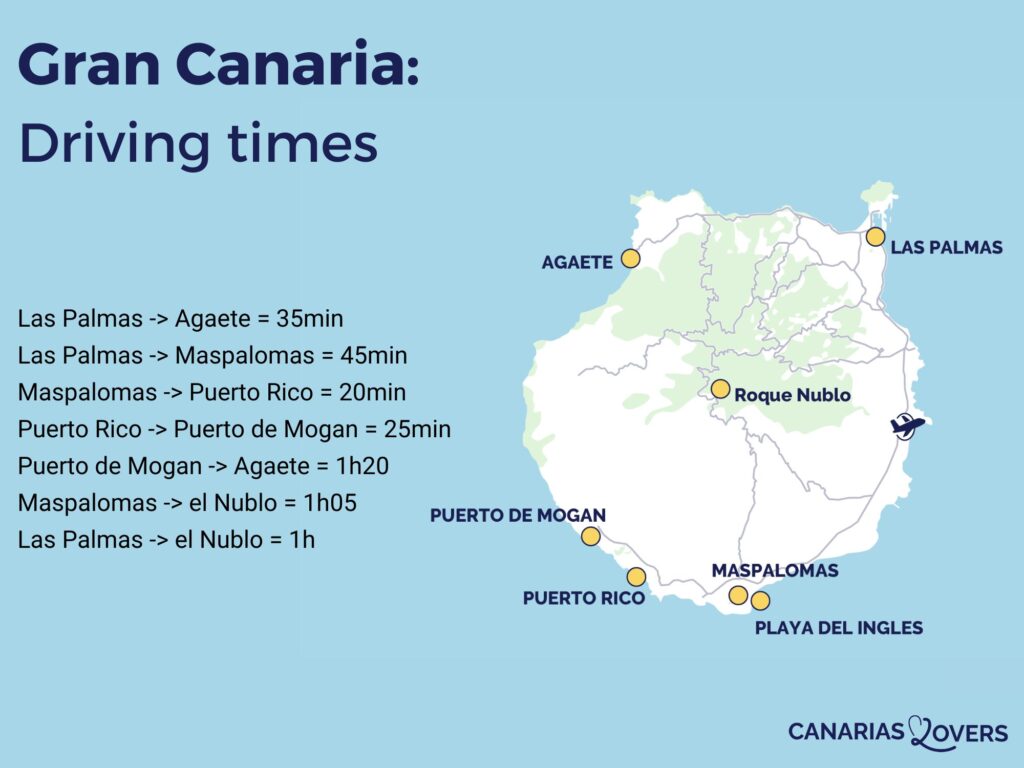
Whether you’re staying in the north or the south, you can explore the whole island on a day trip.
The farthest you can go is 1h30 away.
A main road takes you a good way around the island.
In a nutshell:
Stay in the north if you want more greenery and towns with character.
Stay in the south if you’re primarily looking for beaches, big hotels and outdoor activities/amusement parks.

In the south
- Puerto de Mogán for charm
- Puerto Rico for families
- Maspalomas for all services
In the north
- Las Palmas – the capital, the old town for its charm
- Las Palmas, beach side for beach life
- Agaete – for a quieter, more secluded spot

WHERE TO STAY IN Gran Canaria
Our independent picks for the accommodation of your dreams:
- Where to stay in Gran Canaria
- Our favorite: Marina Suites Hotel
Select by hotel type:
- 5-star hotels
- Best boutique-hotels
- Best adults-only hotels
- Best all-inclusive hotels (coming soon)
- Best hotels for families
Select by city:

Gran Canaria: where are the best beaches? North or South?
Let’s start with one of the most frequently asked questions.
Both regions offer beautiful beaches, but with very different characters. Southern Gran Canaria is the clear winner if you’re looking for golden sand, calm waters and guaranteed sun.
Here’s our selection of iconic beaches on either side, or see our list of Gran Canaria’s most beautiful beaches.
Gran Canaria’s southern beaches
Here are our top 3 southern beaches:
The Maspalomas Dunes
The Maspalomas dunes form a unique landscape in the Canaries. This nature reserve covers 400 hectares with golden dunes reaching up to 10m in height.
The beach itself is huge and offers different atmospheres in different sections. You can walk through the dunes before reaching the ocean, creating an almost desert-like experience.

Amadores Beach
Amadores is a crescent-shaped artificial beach protected by two dikes. The water is particularly calm and shallow.
The golden sand contrasts with the turquoise waters. Palm trees line the promenade along the beach.
We particularly like this beach for its atmosphere.

Puerto de Mogán
The beach at Puerto de Mogán is smaller but has its own special charm. It is located in a village often called “Little Venice” for its canals.
Protected by a dike, the water remains calm. The setting, with its colorful houses and bougainvillea, adds to the peaceful atmosphere.
It’s the ideal place to combine swimming and exploring an authentic village.

Gran Canaria’s northern beaches
The three most interesting beaches in the north are:
Las Canteras Beach
Las Canteras stretches over 3km in the heart of Las Palmas. It’s an urban beach with a distinctly local feel.
A natural rock bar, La Barra, protects a large part of the beach and creates a calm bathing area. The other end, La Cicer, offers great waves for surfing.
We particularly like the relaxed atmosphere and the restaurant-lined promenade where locals come to stroll at the end of the day.

Sardina del Norte Beach
Sardina is a small fishing village with a beach of volcanic black sand. The atmosphere is authentic and very calm during the week.
Rock formations protect the bathing area. At weekends, the people of Las Palmas come here to cool off.
It’s a different experience from the touristy beaches of the south, closer to the everyday life of the Canaries.

Agaete Beach
Agaete beach, also known as Las Nieves, is in a spectacular setting with the cliffs in the background.
The sand is dark and pebbles are present. The water can be rough depending on the day, but the nearby natural pools offer an alternative that we really appreciated.

Climate and water temperature: Gran Canaria North vs South
There’s no real difference in water temperature between the north and south of Gran Canaria.
Water temperatures remain similar all year round:
- Winter (December to March): 19 to 20°C
- Spring (April to June): 20 to 22°C
- Summer (July to September): 22 to 24°C
- Autumn (October to November): 22 to 23°C
On the other hand, the climate is a little different. The south is protected by the central mountains and enjoys almost constant sunshine. The north receives more rain and can be cloudy, especially in winter.
If guaranteed sunshine is your priority, the south is the logical choice.

OUR ADVICE FOR RENTING A CAR IN Gran Canaria
- Compare prices on our preferred platform: DiscoverCars – one of the best rated sites.
- If you’re planning to explore the mountains, don ‘t take the smallest cars. A more powerful engine will be more comfortable.
- But don’t take too big a car either, as some roads are narrow.
- There’s a lot of demand and it’s an island, so book early.

Natural pools
Gran Canaria boasts several natural pools carved out of volcanic rock. These wave-protected pools offer an interesting alternative to beaches, and are particularly popular with locals. It’s the north that wins with a greater quantity and, in our opinion, the most beautiful.
See our list of the most beautiful natural pools.
Piscines naturelles du Nord
Among the best known:
- Agaete pools, Las Salinas
- La Laja swimming pools near the capital
- Charcones de Banaderos

Piscines naturelles du Sud
Among the best known:
- Charco de las Graditas
- La Laja swimming pools near the capital
- Charcones de Banaderos

Activities and theme parks
Gran Canaria offers a wide variety of activities and parks for all ages. The distribution between north and south is fairly unbalanced, with a clear concentration in the south.
For families with children or travelers looking for a variety of activities, southern Gran Canaria is clearly better equipped. The concentration of theme parks and water sports activities offers more options to occupy your days.
The north offers more cultural and natural alternatives, ideal if you prefer museums and gardens to theme parks.
See our list of theme parks in Gran Canaria.
Amusement parks and activities in the South
To the south, think:
Palmitos Park
This wildlife and botanical park is located in an ancient canyon near Maspalomas. It’s home to a wide variety of exotic birds, including several birds of prey and parrot shows.
The cactus garden and butterfly house add to the interest of the visit. We liked the landscaping of the park, well integrated into the natural landscape.
Allow half a day for a complete visit, including the various shows.

Aqualand Maspalomas
The island’s largest water park offers some 30 slides and attractions. Zones are separated by age, with a special area for young children.
The lush vegetation provides welcome shade. The park also features a wave pool area and an artificial river.
In high season, we advise you to arrive at the opening to take advantage of the attractions before the afternoon rush.
Save time, buy your ticket now!

Sioux City Park
This theme park recreates a town in the American Wild West. Cowboy and Indian shows take place several times a day.
The western atmosphere is well recreated, with a zoo, stores and restaurants. Children can enjoy pony rides.
We think it’s a great afternoon out, especially if you’ve got kids who like westerns.
Save time, buy your ticket now!

Northern activities
The north offers fewer theme parks, but makes up for it with other types of activities: museums, gardens…
Poema del Mar (Las Palmas)
This modern aquarium is located in the port of Las Palmas. It features three thematic zones: jungle, reef and deep ocean.
The deep ocean cylinder is particularly impressive, with its 35m height and curved glass. We spent around 2 hours exploring the various pools.
It’s an excellent activity for bad weather days, or to vary the pleasures between two beach days.

FUN in Gran Canaria:activities
Dolphin watching
Buggy / Quad
Snorkeling
Kayaking in the Mogan caves
But also: Canyoning, Horse riding, Via Ferrata, Coasteering… See all options

Most beautiful natural sites
The mountainous interior with Gran Canaria’s famous Roque de Nublo is accessible from both sides. However, each region also offers its own distinctive landscapes.
Southern natural sites
To the south, you will discover
- arid valleys,
- sand dunes,
- colorful rock formations

Natural sites in the North
In the north, with more precipitation, you have
- greener landscapes: craters (like the Bandama Caldera) and valleys
- impressive cliffs

Central sites accessible from both sides
Between the two, don’t miss the chance to climb the mountains:
- Roque Nublo, fascinating rock formation and 360° views
- Roque Bentayga, the lesser-known
- Pico de las Nieves with views over Tenerife
- Artenara and Tejeda, mountain villages
- Pine forest

Villages and heritage: North or South?
The question of heritage and traditional villages clearly favors the north. This region has retained more of its authentic character.
See our selection of Gran Canaria’s most beautiful towns and our list of archaeological sites.
Heritage in the North
Northern towns and villages
The north is rich in architecture. We loved exploring all these old centers.
Here you’ll find characterful houses, charming alleyways, special features such as churches and fountains, and markets full of local produce.
- La Palmas, the capital of course, around its cathedral
- Teror with its colorful houses with balconies. A very pleasant atmosphere, at altitude.
- Arucas and its impressive Gothic church

Northern archaeological sites
The north of Gran Canaria is home to several important archaeological sites bearing witness to the Guanche civilization, the Berber people who inhabited the island before the Spanish conquest in the 15th century.
The Cenobio de Valerón, near Santa María de Guía, impressed us with its 350 cavities dug into the cliffs, probably used as communal granaries.
But it was the Maipés site in Agaete that fascinated us most, between the lava field and the valley scenery. It is home to a necropolis with over 700 volcanic stone burial mounds.
Finally, the best-known is La Cueva Pintada de Gáldar, with its polychrome geometric murals unique to the Canaries.

Heritage in the South
Northern towns and villages
The south has fewer traditional villages, but a few places are well worth a visit. We’ve fallen in love.
Nicknamed “Little Venice”, Puerto de Mogan has been developed and preserves its canals, bridges, colorful houses and bougainvillea-filled alleyways.
Perched in its canyon, Fataga has retained its mountain village character. White houses line the slope.
Aguïmes is a unique village of color and sculpture. A little jewel, in our eyes.

Northern archaeological sites
The south of Gran Canaria has fewer major archaeological sites than the north, but there are a few interesting ensembles that deserve attention.
- Canada de los Gatos, in the heart of Puerto de Mogan, on the seafront
- The Fortaleza de Ansite in surprising landscapes
- The site of Tufia, in a well-preserved Guanche coastal village with circular stone houses and a necropolis.
- Arteara caves in the Barranco de Fataga

A LITTLE MORE patience
All the photos, maps, information and addresses you need to make your stay in the Canaries a success will soon be available in a single ebook!
If you’d like to be notified when our guide to the Canaries is published, please subscribe:
Access
Gran Canaria airport is located between the north and south, making it easy to access both regions.
For the south:
- 25min drive to Maspalomas
- 20min to Playa del Inglés
- 45min to Puerto de Mogán
For the north:
- 25min to Las Palmas
- 50min to Agaete
- 35min to Arucas
A bus network links the airport to the main towns. However, we strongly advise you to rent a car to explore the island freely. Roads are in good condition and traffic flows smoothly outside rush hour in Las Palmas.

Subscribe to our Newsletter
- Get away from it all with Region Lovers’ beautiful destinations!
- Once a month
- Advertising-free
Frequently asked questions
Best region for a car-free vacation
Without a car, the two regions offer different possibilities:
- To the south, Maspalomas and Playa del Inglés allow you to do it all on foot or by local bus. Organized excursions make it easy to discover the rest of the island.
- To the north, Las Palmas offers real city life with public transport. However, access to villages and natural sites remains more complicated.
Notre préférence sans voiture va au sud pour la concentration d’activités accessibles.
Best region for family vacations
For families, the south is the obvious choice:
– Quiet, supervised beaches
– A concentration of theme and water parks
– Many hotels with kids’ clubs
– More stable year-round climate
The north is better suited to families with older children interested in culture and nature rather than theme parks.
Can we combine North and South?
For a stay of 10 days or more, we recommend dividing your time between the two regions. For example:
– 6 nights in the south for sun and beaches
– 4 nights in the north to discover Las Palmas and its authentic villages
This formula lets you enjoy the diversity of Gran Canaria without spending too much time on the road.

PLAN YOUR TRIP TO Gran Canaria
- Best of
Best things to do in Gran Canaria
Most beautiful landscapes
Most beautiful towns and villages
Most beautiful beaches
Best natural pools
Archaeological sites
Best museums
Best boat tours
Secret places, off the beaten track

- Practical advice
25 tips for a successful trip to Gran Canaria
When to go?
How to get around
How to rent a car in Gran Canaria
Driving tips
Best excursions
Itineraries: 3 days – 4 days – 5 days – 6 days – 7 days – 10 days