
Fataga is a picturesque village perched in the mountains of Gran Canaria. With its traditional houses, spectacular views and authentic atmosphere, this small town won us over with its unique charm. Discover our ideas for what to do in Fataga, illustrated with photos that will make you want to go. Bonus: useful tips and additional activities.
Here’s our guide to the must-see places in Fataga, Gran Canaria, and useful tips for planning your visit.
This opinion is completely independent, based on our experiences. We visited the region anonymously, making our own choices and paying our bills in full.
Content
Is the village of Fataga worth a visit?
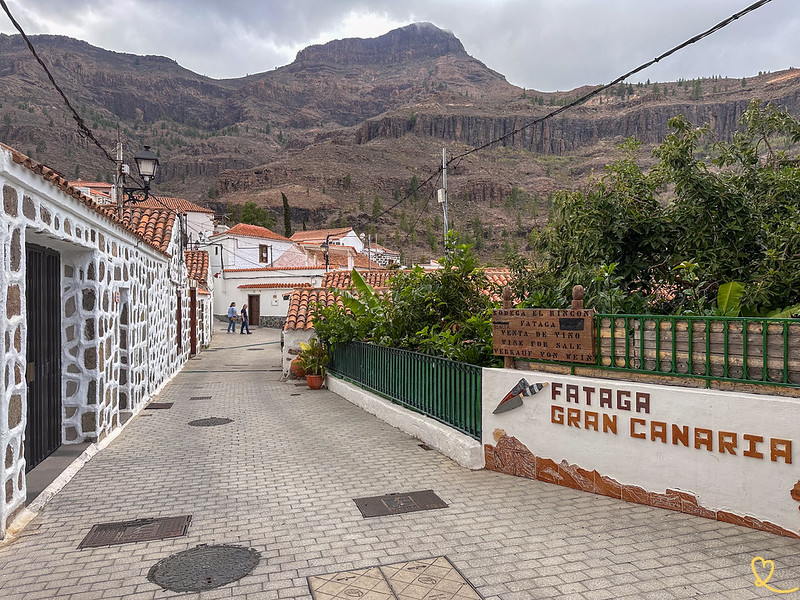
Yes, the village of Fataga is well worth a visit. We were seduced by this small hamlet of white houses that preserves the rural architecture of the Canary Islands. Located in the Barranco de Fataga, nicknamed the “valley of a thousand palm trees”, it offers exceptional scenery and an unspoilt atmosphere.
This is one of Gran Canaria’s most beautiful villages. If you don’t have a car, you can discover it on an organized tour from Maspalomas or Las Palmas – see the tours that pass through Fataga.
1. Admire the city and mountain vistas

We were impressed by Fataga’s spectacular views of the surrounding mountains. The village rises in the Fataga ravine, surrounded by sheer cliffs and brown rocky landscapes dotted with greenery. Enjoy unique panoramic views of this valley of a thousand palm trees, with the contrast between the ochre tones of the mountains and the green of the vegetation. We recommend that you take the time to admire these vistas from different points in the village to fully appreciate the beauty of this natural setting.
A LITTLE MORE patience
All the photos, maps, information and addresses you need to make your stay in the Canaries a success will soon be available in a single ebook!
2. Discover traditional houses

The traditional houses of Fataga are an architectural treasure trove. We strolled through the narrow stone-paved streets, lined with white houses with welcoming tiled roofs. These historic Canarian buildings, some with black volcanic stone on their walls, bear witness to over 2,000 years of history. You’ll notice that the houses bear the names of their owners on the outside, a charming local tradition. The small allotments, the flowers in the windows and on the walls create a peaceful, authentic atmosphere that we found particularly appealing.
3. Go down the GC60 road for views of the village

The GC60 road to Fataga offers extraordinary views of the village (one of the most beautiful roads in Gran Canaria). We advise you to take your time on this descent. And if you’re coming from the south, take the time to climb higher so you can come back down.
You’ll discover breathtaking views of the mountains and the Valley of a Thousand Palms. This serpentine road gradually reveals the charm of Fataga nestled in its natural setting. The panoramas change with every turn.
OUR ADVICE FOR RENTING A CAR IN Gran Canaria
- Compare prices on our preferred platform: DiscoverCars – one of the best rated sites.
- If you’re planning to explore the mountains, don ‘t take the smallest cars. A more powerful engine will be more comfortable.
- But don’t take too big a car either, as some roads are narrow.
- There’s a lot of demand and it’s an island, so book early.

4. Visit San José church

The San José church, built in 1880, stands in the heart of the village as a witness to local history. We appreciated the simplicity of this small church, which blends harmoniously into the village’s architectural landscape. Its square is also a central meeting point where you can observe local life and admire the traditional houses that surround it. The religious building, though modest, reflects the profound identity of this rural community that has preserved its authenticity over the centuries.
5. Explore art and craft stores

Like many charming villages, this place attracts artists and craftsmen.
Here you’ll discover their often colorful stores.
Fataga is home to a number of small local craft stores well worth a visit. Near the church and the bakery, we discovered artisan workshops where you can admire and buy local creations. These art stores offer works that reflect the Canary identity and traditions of the village.
6. Sculptures by Luis Alemán Montull

The village also boasts a number of sculptures, including one by sculptor Luis Alemán Montull, who has his studio in the village.
The sculpture depicts a woman sitting on the ground, holding a palm branch.
It stands in front of the church.
Luis Alemán Montull, born in 1934 in Las Palmas de Gran Canaria, is a Canarian sculptor and painter trained in Barcelona and Paris. He is notably the author of the monumental “Monumento a las actividades primitivas canarias” (14 m high, built between 1975-77 in Tamadaba stone) located at Plaza de España in Las Palmas.
WHERE TO STAY IN Tenerife
Our independent picks for the accommodation of your dreams:
- Where to stay in Tenerife
- Our favorite: Hotel Corales Beach
Select by hotel type:
- 5-star hotels
- Best boutique-hotels
- Best hotels for families
- Best hotels in Seaside
- Best adults-only hotels
- Best all-inclusive hotels
- Top 4-Star Hotels
Select by city:

7. Discover the aloe vera farm

On the way from Arteara to Fataga, you can visit Finca Canarias Aloe Vera, an organic aloe vera farm. This plantation offers a free and enriching visit where the owners explain all the properties of this plant and its benefits. You’ll discover aloe vera fields stretching as far as the eye can see in this mountainous landscape. This experience gave us a better understanding of the local farming culture and traditions of Gran Canaria.
- Free visit
- Explanation of the properties of aloe vera
- Natural products on sale
8. Hiking and climbing

The Fataga region is an ideal playground for hiking and climbing enthusiasts. Here you’ll find numerous trails through the ravines. Steep cliffs and rock formations offer excellent climbing opportunities in a spectacular setting.
Fataga is, among others, on the S54, Camino de Santiago de Gran Canaria.
Subscribe to our Newsletter
- Get away from it all with Region Lovers’ beautiful destinations!
- Once a month
- Advertising-free
Other attractions in and around Fataga
We explored the surroundings of Fataga and discovered other exceptional sites that perfectly complement the visit to the village.
Mirador Astronómico de la Degollada de las Yeguas
Further south, this astronomical viewpoint is one of our favorites on the island. It offers spectacular views of Maspalomas and its dunes on one side, and the Fataga ravine, Arteara and the Amurga massif on the other.

Arteara necropolis
This archaeological site is home to Gran Canaria’s largest aboriginal cemetery, with almost 900 tombs. This necropolis bears witness to 2,000 years of history and includes a fascinating interpretation center.
Camels
Just south of the village, a farm also offers camel excursions.
How to get to Fataga + parking
Where to find Fataga
- In the south of Gran Canaria, in the municipality of San Bartolomé de Tirajana
- Along the GC60 road between Maspalomas and the center of the island
- A 30-minute drive north of Maspalomas
- 1 hour’s drive from Las Palmas de Gran Canaria
- Altitude: 730 metres above sea level
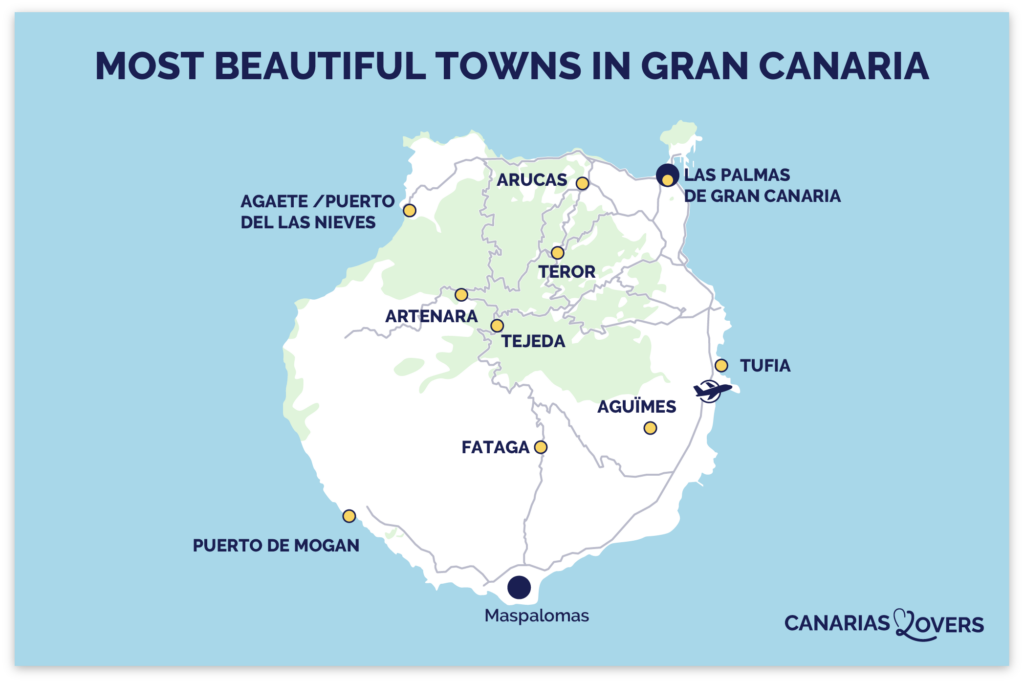
- The Fataga village is shown on the map below:
How to get there
The most convenient way to reach Fataga is by car via the GC60 road. The drive from Maspalomas offers spectacular views. Organized excursions are also available from the main seaside resorts – see the tours that pass through Fataga.
Parking in Fataga
The village has a few parking spaces near the center. You can park close to the church, depending on the time of day, and restaurants to explore the village on foot.
There’s also a pay parking lot not far from the village entrance.

Useful tips for visiting Fataga
How long and when?
Allow an hour to visit Fataga village, and longer if you include the surrounding area. Gran Canaria’s climate makes for a pleasant visit all year round, but we recommend the cooler hours to make the most of the outdoor activities.
Tour directions, map and difficulty
We suggest starting with the village center and church, then exploring the cobbled streets. The terrain is hilly but accessible. Bring good walking shoes to comfortably explore the stone-paved paths.
Visiting with children
Fataga is ideal for families. Children will love discovering traditional houses, visiting the aloe vera farm and taking a camel ride through the Valley of a Thousand Palms. This oasis of palm trees offers a playful and educational setting for teaching youngsters about nature and Canarian traditions.

Restaurants
We recommend Restaurant El Labrador for its speciality goat’s meat and octopus croquettes. The village boasts a total of three restaurants, as well as the island’s oldest bakery, perfect for discovering traditional Canarian pastries.
Fataga offers Canarian gastronomy in several restaurants. Restaurant El Labrador is just across the street from the church. It specializes in goat meat and local delicacies like their octopus croquettes.
Visiting Fataga in winter
Visiting Fataga in winter offers ideal conditions for hiking and exploring the village. Mild temperatures allow us to take full advantage of outdoor activities. We particularly appreciated the winter peace and quiet in this authentic village, far from the tourist crowds of the coastal areas.
PLAN YOUR TRIP TO Gran Canaria
- Best of
Best things to do in Gran Canaria
Most beautiful landscapes
Most beautiful towns and villages
Most beautiful beaches
Best natural pools
Archaeological sites
Best museums
Best boat tours
Secret places, off the beaten track

- Practical advice
25 tips for a successful trip to Gran Canaria
When to go?
How to get around
How to rent a car in Gran Canaria
Driving tips
Best excursions
Itineraries: 3 days – 4 days – 5 days – 6 days – 7 days – 10 days